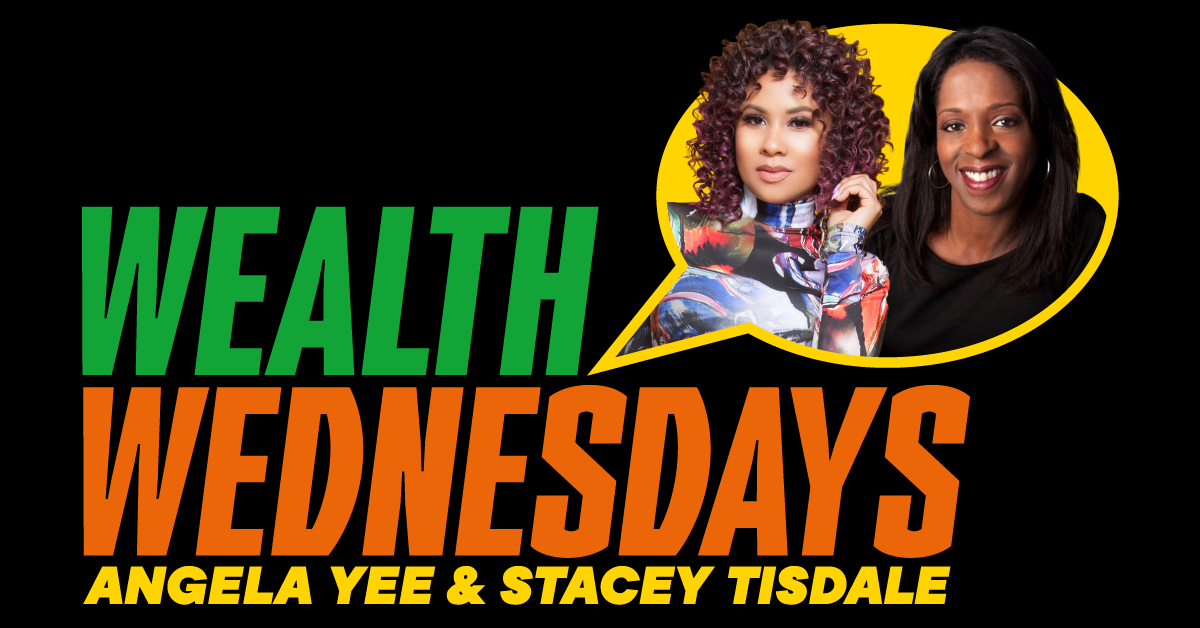
Stacey Tisdale & Newly Engaged Wealth Wednesdays Co-Host, Angela Yee, Breakdown the Money Conversations Every Couple Should Have Before Marriage
Two weeks after getting engaged in St. Martin, Angela Yee sits down with Wealth Wednesdays co-host Stacey Tisdale for a candid conversation about love, money, wedding planning and building a financial life together.
By Stacey Tisdale
Financial Behavior Expert, Journalist and Co-Host of Wealth Wednesdays with Angela Yee

Two weeks ago, Angela Yee got engaged in St. Martin.
And while there are plenty of conversations to have about rings, wedding venues and what comes next, on Wealth Wednesdays, we decided to talk about something couples don’t always find quite as romantic: money.
Except maybe it should be.
Years ago, I did a story for the Today show called “5 Tips to Help Discuss Money With Your Honey.” The premise was simple: money is one of the most difficult things for couples to talk about, but learning how to have those conversations can actually bring you closer.
With Angela newly engaged and beginning to plan her wedding and financial future with her fiancé, it felt like the perfect time to revisit that conversation.
And Angela made it real.
She talked openly about how they handle money now, the differences in their spending styles, keeping separate bank accounts, her idea for a joint household account after they’re married, saving travel points for vacations and even the shared spreadsheet she’s creating as they begin figuring out what their wedding will cost.
Here are some of the biggest lessons from our conversation.
Financial Fidelity Comes Before the Money Talk
Before couples worry about having the perfect conversation about money, I believe there’s something even more fundamental: financial fidelity.
That means doing what you say you’re going to do.
If you agree to contribute $500 toward the bills, contribute it. If you say you’re paying the electric bill, pay it. Trust around money isn’t built through one big conversation. It’s built through consistently keeping the financial commitments you make to each other.
Angela immediately recognized the larger point: when someone repeatedly doesn’t do what they said they would do, it affects trust.
Money is no different.
Your Partner’s Money Story Is Not Your Money Story
One of the most important things couples can understand is that we all enter relationships with a financial history.
I shared the example of my former marriage. My ex-husband’s parents had been deeply shaped by economic hardship, so saving was paramount. My parents grew up poor and Black in the South and developed a very different philosophy. They weren’t going to allow a lack of money to keep them from having certain experiences.
As I joked with Angela, he bought generic. I bought organic.
Angela and her fiancé have differences, too. When they shop, Angela naturally looks for what’s on sale. He doesn’t necessarily approach spending that way.
Neither automatically makes one person right and the other wrong.
When we tell a partner that the way they think about money is “wrong” we’re often telling them that the experiences that created their beliefs are somehow less valid than ours.
A much better tool is curiosity.
Why do you spend that way? Why does saving make you feel safe? Why does this purchase matter to you? What did money mean in your house growing up?
Those conversations can tell you far more about the person you’re marrying than a credit score ever could.
Build Together, But Keep Some Financial Independence
Angela shared that she and her fiancé are very transparent about what they earn. They know what’s happening in each other’s financial lives, but they currently maintain separate bank accounts.
Her idea for marriage is one I like: keep their individual accounts while establishing a joint account for shared expenses, with each contributing an agreed-upon amount every month.
I also believe each partner should have some money that is truly their own.
Not secret money. Not dishonest money.
Independent money.
Once you’ve agreed on what you’re building together and met your shared responsibilities, there should be an amount each person can control without criticism or interrogation.
Financial independence doesn’t have to threaten a partnership. It can strengthen one.
As I told Angela, handing another person your financial well-being and expecting them to take care of you isn’t a test of how much they love you. Being financially sound yourself can allow you to move through a relationship with greater freedom and security.
Don’t Just Share Bills. Share Goals.
I loved hearing something Angela and her fiancé already do.
They both travel for work, so they save their airline and hotel points and use them toward a big trip together each year. Instead of treating those rewards as individual perks, they’ve turned them into a tool for creating something they value as a couple.
That’s what financial planning can look like at its best.
Ask each other:
What do we want this year?
Where do we want to be five years from now?
What kind of life are we trying to create?
And then comes the question I think is especially important:
What needs to change in our behavior today for us to become the people who can create that life?
Money shouldn’t only be about what you can’t afford. It should also be a language for talking about what you dream about together.
Have a Money Date, Not a Money Fight
“Can we talk about money?”
For a lot of people, those five words immediately create anxiety.
That’s why I recommend a regular money date.
Attach something enjoyable to it. Have dinner. Pour some coffee. Go someplace you like. And don’t spend the entire conversation reviewing problems.
Talk about your dreams, too.
Look at what’s working. Revisit your short and long-term goals. Decide what needs attention. And play to each other’s strengths.
I also wouldn’t schedule your big financial conversation around the beginning or end of the month when bills are due and stress may already be elevated.
Money conversations don’t have to feel like financial performance reviews.
Plan the Wedding, But Keep Your Eyes on the Marriage
This one is suddenly very real for Angela.
She and her fiancé are looking at wedding venues and are only beginning to determine what their wedding budget will be. Angela has already proposed a shared spreadsheet so they can see the numbers together, figure out what they need to save each month and make decisions accordingly.
And yes, Angela plans to strategically put expenses on her credit card where it makes sense.
Why?
Points, of course.
But underneath the fun of wedding planning is a much bigger financial question.
What do you want your life to look like after the wedding?
Once you know what you’re trying to build over the next year, five years and beyond, you can decide how much of your resources you actually want to put toward one extraordinary day.
The wedding should be part of the financial plan. It shouldn’t become the financial plan.
Money Can Actually Bring You Closer
We spend a lot of time talking about the damage money can do to relationships.
But the opposite is also true.
Money can become a way of learning someone’s history. It can expose fears and dreams you didn’t know they had. It can teach you how to negotiate differences, keep promises, divide responsibilities and build something together.
Angela put it beautifully at the end of our conversation: whether you’re newly engaged, dating, already married or simply haven’t had these conversations yet, now is the time to start.
And as for my newly engaged co-host?
She told me this is the beginning of the journey.
I told her I’ve got her.
Because apparently my Wealth Wednesdays duties now include helping Angela Yee get married without losing her financial mind.
I’m happy to take the assignment.
Watch our full Wealth Wednesdays conversation here: https://www.youtube.com/watch?v=GAa3EVjbUjk
Stacey Tisdale is an award-winning financial journalist, financial behavior expert, author and Founder & CEO of Mind Money Media, Inc. She is the creator and co-host of Wealth Wednesdays with Angela Yee & Stacey Tisdale, nationally distributed across iHeartMedia broadcast and digital platforms. Her work explores the psychological, emotional and behavioral dimensions of financial decision-making and how education, technology and media can help people translate financial access into action.