
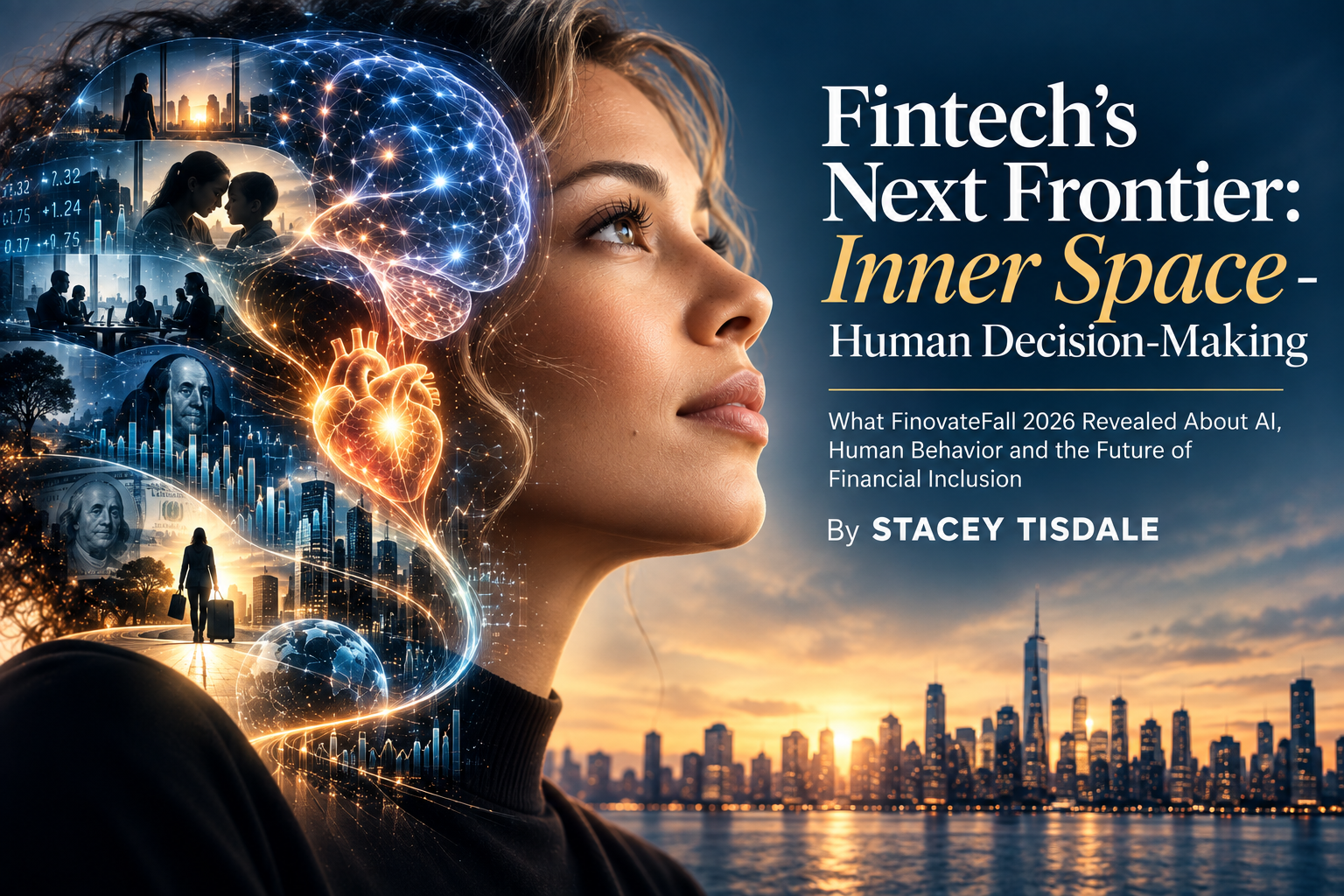
Fintech’s Next Frontier: Inner Space - Human Decision-Making
What FinovateFall 2026 Revealed About AI, Human Behavior and the Future of Financial Inclusion
By Stacey Tisdale
Financial Behavior Expert, Journalist and Co-Host of Wealth Wednesdays with Angela Yee
I went to FinovateFall 2026 in New York expecting to see the future of financial technology.
What I found was something bigger.
Over three days of live demos, panels and conversations with founders, financial services leaders and innovators, Finovate did what the best gatherings do: it changed the questions I was asking.
I arrived thinking about technology.
I left thinking about human nature.
Across demonstrations and conversations, I kept noticing the same thing. Some of the most interesting innovations were not simply helping financial institutions process more information, move money faster or build more sophisticated products.
They were trying to understand us.
When do we make our best decisions? What makes us act impulsively? What causes us to freeze? How do emotion, stress, identity and context influence a financial choice? And how can technology recognize those moments early enough to help?
At a moment when some of technology’s biggest ambitions are aimed toward outer space, I found myself thinking about another frontier.
Inner space.
The complicated terrain of human thought, emotion, identity and decision-making.
And financial technology may be taking us there faster than we realize.
Financial information was never the whole problem
I have spent more than two decades studying the psychological, emotional and behavioral forces that shape our relationship with money.
One lesson has remained remarkably consistent throughout that work:
Knowing what to do and being able to do it are two very different things.
We can give someone access to a financial product. We can teach them how it works. We can put a calculator in their hands, an app on their phone and information at their fingertips.
But none of those things automatically removes fear, shame, scarcity, distrust, trauma, decision fatigue or the deeply conditioned beliefs that can influence what happens next.
That is why I have increasingly come to think of financial inclusion as having at least two dimensions.
There is the critically important work of creating access.
And then there is the equally important work of helping people become psychologically, emotionally and behaviorally prepared to act on the opportunities that access creates.
That second frontier was everywhere I looked at FinovateFall.
Technology is beginning to meet us at the moment of decision
One of the demonstrations that stayed with me came from Finzee founder Michelle Soto.
Her technology incorporates biometric information to help identify when someone may be in a better state to make a financial decision, or when they may be more susceptible to an impulsive one.
Think about what that represents.
For decades, much of financial education has operated on the assumption that if we give people better information, they will make better decisions.
Behavioral science has long told us otherwise.
Now technology is developing the ability to recognize some of the conditions surrounding the decision itself.
That creates extraordinary possibilities.
It also creates extraordinary responsibility.
Because the question is no longer simply:
What can technology know about us?
It is becoming:
What should technology do with what it knows?
AI can create a different kind of safe space
This question has particular implications for communities that have historically felt judged, excluded or misunderstood by financial systems.
There are financial questions people do not ask because they are embarrassed.
There are mistakes they do not admit because they fear judgment.
There are conversations about money, debt, wealth, family obligations and even success that carry cultural and emotional dimensions that a traditional financial interface may never see.
Responsibly designed AI offers an intriguing possibility: a private space in which someone can explore what is happening internally before making a consequential financial decision.
Not an AI system pretending to be a financial adviser.
Not technology replacing human expertise.
Something different.
A thought and reflection partner that can help someone recognize what may be influencing a decision, slow down when necessary, ask better questions and become better prepared to engage with the expertise, support and resources that can actually move them forward.
A bridge to human expertise, not a replacement for it.
That distinction matters enormously.
We have been here before
Almost exactly a year ago, I found myself asking related questions while creating and moderating a panel for the 2025 UN Science Summit called The Next GDP: AI, Human-Centered Value Creation, and the Roadmap to 2050.
I came out of that experience thinking about something I eventually called Put Your Why Into AI.
AI, after all, does not arrive with its own human purpose.
We give it one.
It reflects our questions, priorities, assumptions and values back to us, sometimes in ways that allow us to see ourselves more clearly.
One of the ideas I explored then was metacognition, our ability to think about our own thinking.
Our financial choices do not happen in a vacuum. They can be influenced by childhood scripts, cultural norms, gender roles, fears, biases and the experiences that have shaped what money means to us.
So what happens when technology gives us a way to examine those influences closer to the moment when we are actually making a decision?
A year ago, that was largely a question for me.
At FinovateFall, I began seeing pieces of the answer being built.
What if we could bring behavioral reflection closer to the actual moment when a financial decision is being made?
What if technology could help us create enough mental and emotional space to make a different choice?
What if financial technology became not only smarter about our money, but more thoughtful about our humanity?
The next financial inclusion challenge may be wealth itself
There was another theme beneath many of my conversations at FinovateFall that deserves much more attention.
Across multicultural and historically underrepresented communities, tremendous entrepreneurial energy is creating a new generation of first-generation wealth creators.
That is an extraordinary achievement.
It also creates an entirely new set of behavioral challenges.
Creating wealth and being conditioned to manage, scale and transfer wealth are not the same thing.
I see this in my work with entrepreneurs. I have seen versions of it in my work around the financial behavior of professional athletes.
First-generation wealth often means learning, in real time, the scripts that families with multigenerational wealth may have had generations to develop: delegation, investing, risk, leadership, succession, estate planning, family expectations and legacy.
The financial services institution that truly understands this transition, not merely as an asset acquisition opportunity but as a human transition, has an opportunity to lead an extraordinarily important conversation.
And I do not think anyone has fully claimed that mantle yet.
And then there is longevity
Another defining financial issue is coming toward us from the opposite end of the life cycle.
We are living longer.
That is a gift.
But longevity also means longer retirements, more years of caregiving, more complex family financial responsibilities and an expanding sandwich generation trying to simultaneously care for children, aging parents and themselves.
Again, the mathematics matter.
But so does the human behavior.
How do people make sound decisions when they are exhausted?
How does financial stress affect mental bandwidth?
What happens when family obligation collides with retirement security?
How do we design financial tools for people whose decisions are being made inside emotionally complicated lives?
These are not peripheral questions.
I believe they will become some of the defining financial questions of our time.
Technology may finally be able to keep up with our curiosity
That may be what excited me most about FinovateFall.
For much of my career, those of us studying financial behavior have had to examine the internal world indirectly through research, interviews, surveys, observation and conversation.
Now we are developing tools capable of responding to human context with a speed and level of personalization we have never had before.
That does not mean technology understands human beings.
We created it.
And we should never confuse a sophisticated mirror with the person standing in front of it.
But perhaps we have finally built something capable of keeping up with our curiosity about ourselves.
That is an extraordinary opportunity, as long as we remain clear about who is supposed to be serving whom.
The future of fintech will not be defined only by how intelligent our technology becomes.
It will also be defined by whether we use that intelligence to become more thoughtful about human beings.
That is the frontier I left FinovateFall most excited to explore.
And I suspect we are only beginning.
Thank you, FinovateFall
A special thank you to the Finovate team for creating a space where technology is not simply demonstrated, but examined, debated and imagined in the context of the people it is ultimately meant to serve.
The conversations I had in New York, with founders, innovators, financial services leaders and people thinking deeply about financial inclusion, reminded me why convenings like FinovateFall matter.
The best innovation does not simply give us new answers.
It gives us better questions.
And I left FinovateFall with plenty of them.
Stacey Tisdale is an award-winning financial journalist, financial behavior expert, author and Founder & CEO of Mind Money Media, Inc. She is the creator and co-host of Wealth Wednesdays with Angela Yee & Stacey Tisdale, nationally distributed across iHeartMedia broadcast and digital platforms. Her work explores the psychological, emotional and behavioral dimensions of financial decision-making and how education, technology and media can help people translate financial access into action.
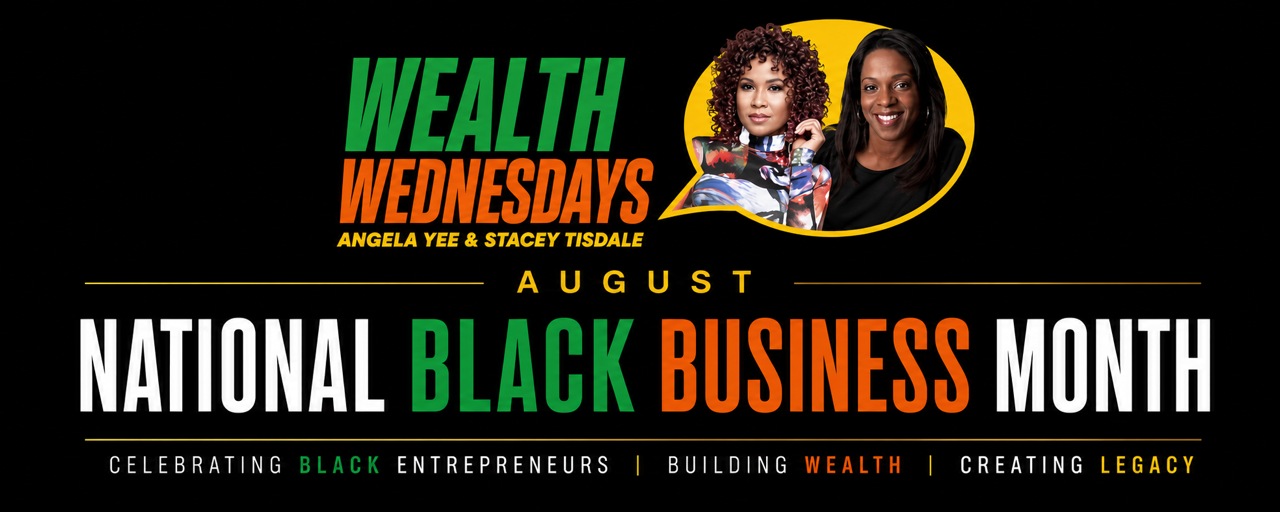
How Courtney Adeleye Turned $500 Into a $100 Million Business and Then Built an Even Bigger Legacy
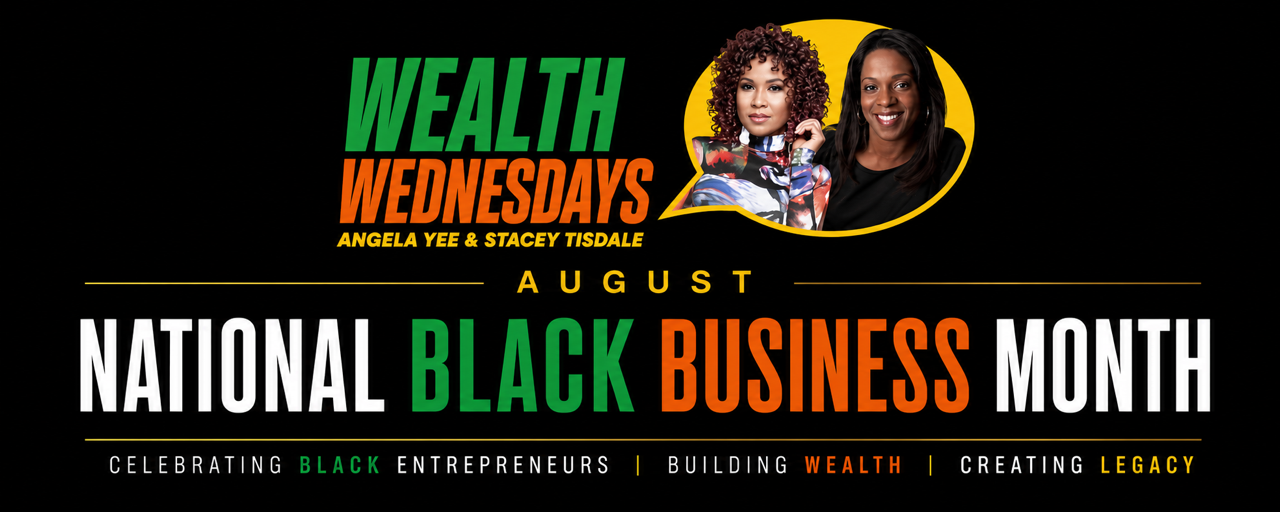
How Courtney Adeleye Turned $500 Into a $100 Million Business and Then Built an Even Bigger Legacy
From sleeping in a car to building a $100 million company, Courtney Adeleye is redefining what it means to create wealth, ownership and opportunity.
By Stacey Tisdale
Financial Behavior Expert, Journalist and Co-Host of Wealth Wednesdays with Angela Yee
August is Black Business Month, and throughout the month, Wealth Wednesdays is celebrating Black entrepreneurs who have changed industries, created opportunities and expanded what’s possible for the next generation.
There wasn’t a better entrepreneur to begin with than Courtney Adeleye.
Today, Courtney is the founder and CEO of Watch & Sea Beauty, but many people first came to know her as the entrepreneur behind The Mane Choice, the hair care company she built from just $500 into a business generating more than $100 million in sales before selling it in a $61.5 million acquisition.
As impressive as those numbers are, they tell only part of her story.
A Dream Bigger Than Her Circumstances
Long before the retailers, the national recognition and the business headlines, Courtney was a young girl growing up in Detroit. Raised by a single mother alongside her two sisters, she experienced periods of homelessness and, at times, slept in her family’s car. She began working at just 15 years old, then followed her mother’s example by earning a nursing degree.
Those experiences didn’t just shape her work ethic.
They shaped her purpose.
After a damaging salon experience, Courtney began documenting her own healthy hair journey online. What started as a personal solution became something much bigger. She educated first, built trust, and created a community before she ever built a company.
People believed in Courtney before they believed in her brand.
From $500 to $100 Million
One of the questions Angela and I were most excited to ask Courtney was how she transformed a $500 investment into a company generating more than $100 million in sales in just six years.
The answer isn’t simply about beauty products.
It’s about vision.
It’s about discipline.
It’s about solving a real problem and refusing to cut corners.
Courtney has often said, “There is no such thing as an oversaturated industry. An industry cannot be oversaturated if I am not currently producing in it.”
That mindset is exactly what separates entrepreneurs who follow markets from entrepreneurs who create them.
Building an Enterprise, Not Just a Business
As a financial behaviorist, one of the themes I’m fascinated by is the difference between building a business and building an enterprise.
Many Black entrepreneurs are first-generation business owners trying to create second-generation wealth.
We inherit stories about hard work, sacrifice and survival.
We don’t always inherit the playbook for scaling, negotiating, raising capital, building enterprise value or preparing a business for an exit.
Courtney has lived every one of those lessons.
She has spoken candidly about the challenges Black founders often face when trying to access capital and how those obstacles forced her to become resourceful, disciplined and intentional as she grew her company.
Her story reminds us that entrepreneurship isn’t just about having a great idea.
It’s about learning to think differently at every stage of growth.
The Ownership Lesson Every Entrepreneur Needs
One of the most fascinating moments in our conversation centered on a lesson every entrepreneur should hear.
As Courtney prepared to sell The Mane Choice, she discovered she didn’t actually own one of the company’s most valuable assets, the product formula. When she approached the manufacturer, the response was essentially, “Too bad.”
Many entrepreneurs might have accepted defeat.
Courtney didn’t.
She stopped placing orders, putting pressure on the manufacturer until they returned to the negotiating table.
It was a bold move.
More importantly, it was a powerful reminder that ownership isn’t just about having your name on the business.
It’s about controlling the assets that create its value.
Success Was Never the Finish Line
Most entrepreneurs spend their careers hoping to build one successful company.
Courtney did something much rarer.
She built one.
She sold it.
Then she started again.
Today, Watch & Sea Beauty is expanding rapidly across major retailers nationwide. She has also expanded beyond beauty, building additional brands, including Cool Coffee Clique, proving that what she created wasn’t a one-time success.
She developed a repeatable way of thinking about business.
Building Wealth That Builds Others
Perhaps the most inspiring chapter of Courtney’s story began after the acquisition.
Instead of viewing success as a finish line, she saw it as a beginning.
She created the $30 million Generational Advantage Fund, investing her own personal capital into entrepreneurship, financial literacy, housing, scholarships and mentorship for women and communities of color.
It’s a reflection of something Courtney has said publicly for years.
She doesn’t simply want to build successful businesses.
She wants to create more entrepreneurs.
More women business owners.
More opportunities.
More generational wealth.
It’s a powerful reminder that true wealth isn’t measured only by what we accumulate.
It’s measured by the opportunities we create for others.
A Conversation You Won’t Want to Miss
We’re honored to kick off our celebration of Black Business Month with one of the most influential entrepreneurs of her generation.
Courtney Adeleye’s story is about far more than beauty products.
It’s about resilience.
It’s about ownership.
It’s about faith.
It’s about building something so valuable that it changes your life, then using that success to help change someone else’s.
We hope you’ll join us for this inspiring conversation.
▶️ Watch the full interview here.
Throughout Black Business Month, Angela and I will be celebrating entrepreneurs who remind us that building wealth isn’t just about creating successful businesses. It’s about expanding what’s possible for everyone who comes after us.

How Your Attitude About Race Affects Your Wallet

How Your Attitude About Race Affects Your Wallet
What happens when we fit our own stereotypes
I once heard a presentation by Tiffany Taylor Smith, the founder of Culture Learning Partners, a company that helps organizations and individuals navigate cultural differences, discuss ‘inherit bias’ – attitudes we carry about race and culture that we are not aware of.
I approached her after the program and we discussed how those biases play out in financial behavior. These biases are obvious when we think about the ways in which others treat us. We’ve all heard or experienced stories of practices like predatory lending, in which equally qualified blacks get higher rates for things like mortgages and cars, from lenders, many of whom are probably not ‘conscious’ about personal prejudices.
The conversation Taylor and I had, however, was more about the ways in which the often-unconscious messages that play in our own heads play out in our experiences with money.
[Click HERE for a quick read and video about the investing habits of wealthy Blacks]
The Songs We Play In Our Heads
Think about it what comes to mind when you think about your racial, ethnic, even religious orientation, when it comes to money. “People like me always struggle.” “People like me watch every penny.” “Our people don’t invest in the markets.”
As Life Planner and founder of Compass Wealth Management, Martin Siesta once told me, “These expectations we put on ourselves and the outside messages we receive have a really strong influence on behavior,” said Siesta. “I would urge people to look at those influences and ethnic messages. Ask: Is this how the world really is, or is this just how I see it? To create change, you have to be mindful of that, and follow your own common sense…Don’t let stereotypes weigh on your self-esteem,” he adds.
[Click HERE to learn simple acts that make your financial goals a reality!]
Solve The Right Problem
Ask yourself the following questions:
1. What do I see people like me doing when it comes to money? What do I see them doing when it comes to saving? Spending? Investing? Debt?
2. What do I see people like me not doing when it comes to money? What don’t they do when it comes to saving? Spending? Investing? Debt?
3. How messages am I telling myself about money? “People like me can’t afford to save.” “People like me always have debt.” “I can’t even think about retiring.”
4. How would those messages change if I were living my ideal relationship with money…if I were channeling my financial resources towards my goals?
5. How would I act differently and how would my choices change if I operate from my new messages?
Create a support system to snap you out of beliefs that don’t bring you closer to your goals and priorities. Name them, write them, down, discuss them with friends, and literally rewrite those messages so that they state the highest vision you have for yourself.

10 Tips for Side Hustlers: Stacey Tisdale Shares Advice for Side Hustlers

10 Tips for Side Hustlers: Stacey Tisdale Shares Advice for Side Hustlers
How to Make it in the New Gig Economy Side Hustle Ideas and Tips to Succeed
The side hustle has been defined as an asset that works for you. It is part of the increasing gig economy in the U.S., a way to make extra money when the day job isn’t enough. Nearly 4 in 10 Americans have a side gig. The average monthly take — $686. Millennials are more likely to have a side hustle than other generations, with 68% reporting the extra cash as “disposable income.” Popular side hustle gigs are freelance writing, ridesharing, tutoring, and video editing. Here are additional ideas for a side hustle.
What are People Side Hustling?
Create and manage social media ads for local businesses (Typical earnings: $1,000 – $2,000/month per client)
Tutor kids online. VIPKid, is a popular service to teach children English. And you don’t need teaching experience, they provide you with the lesson plans. (Typical earnings $1000+/month)
Sell products online. Etsy is one of the largest resources for selling handmade goods on the internet. We interviewed Arianna O’Dell, who started a business on Etsy and earned an extra $30,000 in a year.
Sell services online. Fiverr helped give birth to the Gig Economy. Side hustlers are offering services like graphic design, digital marketing, and video editing. Although services start out at $5, some Fiverr sellers are earning six-figure-plus revenues annually.
Work as a virtual assistant. There’s a growing demand from small business owners who need help on various projects from scheduling appointments and managing events to overseeing social media posts and website updates.
Blogging, making YouTube tutorials, creating online courses.
Sell used technology and goods on sites like Gazelle and eBay
If these sound like good ideas but you’re just not sure how to manage a side hustle, here are five tips to keep you grounded and focused.
5 Tips for Side Hustlers
Stick to a schedule: Decide how many hours you think you can spend a day on your side hustle. Then add 25 to 50%. If you’re thinking 2 hours, make it 3 or 4. Then commit to that schedule.
Don’t take on debt: Start a side hustle you can fund through savings — or better yet, that you don’t need to fund. Provide a service that only requires the tools you already have. Prove there is a market and you can serve it before you take on debt.
Only spend money and time on things that make money: Don’t overspend on supplies before you have demand. You only make money when you’re creating your product. Spend less time planning and more time doing.
Don’t spend money on things customers won’t see, like an office or fancy amenities. If your customer doesn’t see it, don’t buy it.
Do something you enjoy: Think of your side hustle as ‘me time.’ It will make your life better and happier.
Stacey Tisdale and Angela Yee will share more about getting your side hustle on their monthly FaceBook live event Wealth Wednesday. They will be joined by side hustler Arianna O’Dell and Lamine Zarrad, the CEO of Joust, a new digital bank for the gig economy. All Wealth Wednesday events take place and are recorded at Juices for Life in Brooklyn, New York. Tune in to the Wealth Wednesday Livestream Facebook live event on Angela Yee’s Facebook page, with over 2.2M followers.
![[Money] 3 Reasons Not to ‘Panic Sell’ in a Falling Stock Market](https://images.squarespace-cdn.com/content/v1/6011ce08663bad3a50903423/1626753133213-RXWXKO51H7SJQ08NSGTY/CEC7DB2F-C624-4815-B4BB-27D9FB028D2A.jpeg)
[Money] 3 Reasons Not to ‘Panic Sell’ in a Falling Stock Market

[Money] 3 Reasons Not to ‘Panic Sell’ in a Falling Stock Market
Keeping emotions in check and reaping the financial benefits of courage
Fears that fast-moving Delta Variant of the coronavirus will put the brakes on a return to ‘social norms’ and economic recovery in the U.S. and abroad weigh is weighing heavily on stock prices.
A surge in new investors, courtesy of micro-investing apps like Robinhood, means many people are facing market turbulence and shrinking portfolios for the first time.
The Long Haul
It is important to remember that stocks are still the best game in town when approached as a long-term investment. The average 10-year stock market return is 9.2%, according to Goldman Sachs
A good rule of thumb is to only invest money in the stock market that you will not need for the next 3 to 5 years. That’s a lot easier said than done, however, when we see the size of ou

[Click HERE For Our Beginners Guide To Investing In The Cannabis Economy – The 411 On 420!]
Keeping Your Emotions In Check
That makes it imperative that we keep our emotions in check. Keeping these 3 tips in mind may keep you from making a premature exit from stocks at the expense of future returns.
1. You haven’t lost a penny until you sell: It’s important to remember this when you see scary headlines or hear fearful ‘water cooler’ chatter about plummeting markets. Despite its ups and downs, The Dow Jones Industrial Average has had an average return of about 7.75% from 1921 to present. Ride out the storm, and give your stock investments time and space to do what they do best: Grow.
2. Don’t train your brain to make financial decisions based on fear: Fortunately for our physical safety, but unfortunately for just about everything else, the reptilian part of our brain is programmed to respond to fear in the ‘hear and now’ at the expense of logic. Money is so tied to our sense of survival that watching our portfolios plummet or our assets shrink on paper will literally throw our minds and bodies into a fight or flight response. Take a deep breath and reconnect with your long-term financial goals when you sense you’re letting fear run the show. Give your brain experiences that show it that you don’t have to give into panic.
3. Warren Buffett is right: Buffett is famous for saying It’s wise to be “fearful when others are greedy and greedy when others are fearful.” In other words, don’t follow the crowd over a cliff. Heed the billionaire’s advice, and see lower stock prices for what many of them are, great buying opportunities.
[Click HERE to Check out Our Short Blog & Video “What Wealth Blacks Can Teach Us About Investing]
Know Thyself – Master Your Fears
When it comes to investing, there are many things to consider. For example:
• Your tolerance for risk: You don’t want the markets keeping you up at night.
• Your time horizon: Many experts agree that money you will need in 3 years or less should be in less risky investments like bonds or cd’s.
• Your long-term goals: Today’s economic challenges make investing essential for many of us in order to create long-term financial security.
Our minds can’t tell the difference between real or imagined fear. It’s up to us to bring our powers of discrimination and reason into our decision making.
![[Personal Finance] Simple Acts That Make Financial Goals A Reality](https://images.squarespace-cdn.com/content/v1/6011ce08663bad3a50903423/1626534864343-YU6VX6MXUVS0FQP3NDYG/5F0326F3-BAC6-4450-8229-F3CEAE32786C.jpeg)
[Personal Finance] Simple Acts That Make Financial Goals A Reality

[Personal Finance] Simple Acts That Make Financial Goals A Reality
The ‘game-changing’ power of accountability
It’s hard to stay focused on our financial goals when we’re worried about money. But that’s actually the time when goal-setting matters the most.
Neuroscientists have learned that when we set a goal, we set off a chemical process in our brains that create strategies to achieve them: the ‘smarter’ your goals, the smarter the solutions.
Be $mart
When it comes to setting goals, make sure they pass the smarttest.
S-specific: I will save 5 hundred dollars in an emergency fund by next December! Specific goals help you make better spending and savings choices.
M-measurable: if you want to save 5 hundred dollars by December, you know you must save 50 dollars a month beginning in march and be at the $250 mark by July. Achieving that measurable mid-year success motivates your brain and builds confidence to keep going.
A-attainable: researchers from New York University found that when our brains perceive our goals to be unattainable, our blood pressure and drive actually go down. So make sure your goal is realistic enough to actually reap the reward of setting one. Is $500 a reach or is it do-able?
Relatable: you should be able to clearly share your goals with a friend or loved one. This accountability greatly improves your chance of success.
T-timely: if you’re helping your child pay for college this year, it may not be the time to buy a new house, or even save an extra 5 hundred dollars. Timely goals eliminate financial stress.
[CLICK HERE to learn about the investing habits of wealthy Blacks]
Accountability = Success
Gail Matthews from Dominican University in California Matthews recruited a variety of entrepreneurs, attorneys, educators, artists, managers, and other professionals from different parts of the world and broke them into five groups:
Group 1 was asked to think about their goals
Group 2 not only had to think about their goals, but they also typed them into a survey
Group 3 did all of the above and also wrote an action plan for each goal
Group 4 did all of the above and had to share their commitments with a friend
Group 5 did the same things but also had to send a friend a weekly progress report
The study looked at outcomes over a 1 month period. When it was complete, Group 1 accomplished 43% of their stated goals. Group 4 accomplished 64%, Group 5, the most successful accomplished 76%.
“This study provides empirical evidence for the effectiveness of 3 coaching tools: Accountability, commitment, and writing down one’s goals,” said Matthews.
[Click HERE to get Wealth Wednesdays Weekly Wealth Builder newsletter]
Get Real
As Matthews and other researchers have proven, there’s a connection that’s made between the brain and the progress of where we’re going when things are written and we see it.
This is not a dress rehearsal. This is your real life. Take a few extra steps and make your financial goals a reality.

5 Things You Must Consider When Friends and Family Ask for Money

5 Things You Must Consider When Friends and Family Ask for Money
Making Smart Lending Decisions, While Keeping Relationships In Tact
A few years ago, I conducted a workshop for a professional sports team about managing money. It was a bittersweet moment for this fan. I loved this team, yet they were having a horrible season.
The evening before, I invited a friend who was a former pro-athlete, to join me for my presentation. I was hoping he could help me better engage what I feared would be a distracted audience after yet another horrendous loss.
Camaraderie
Inviting my friend turned out to be a good move. When I asked him to share what he found to be his biggest financial challenge in his professional career, he said without hesitation, the loans he made to friends and family. That quickly grabbed the team’s attention, with most heads and expressions signaling agreement.The entire energy in the room changed.
In my work as a financial journalist, and my research in the financial behavior of pro-athletes, I was very familiar with the reality that most run into huge financial challenges - even bankruptcy - soon after their sports careers end.
[CLICK HERE TO RECEIVE OUR FREE WEEKLY WEALTH BUILDER NEWSLETTER!]
According to Sports Illustrated, within five years of retirement, an estimated 60% of former NBA players are broke. By the time they have been retired for two years, 78% of former NFL players have gone bankrupt.
Size Doesn’t Matter
The public is quick to blame this on extravagant and irresponsible spending, but in reality, many of them also fall victim to the pressure to lend, as well as support family, friends, and entourages.
Psychologist and psychotherapist, Dr. Jeanette Raymond, says part of it is also chemical. “We’re chemically wired to be drawn to situations where we can rescue someone. It’s very hard to stop”
“When we help someone in need, we get a rush of dopamine that is the same as the release when we feed an addiction,” she adds.
While this dynamic is exacerbated in athletes and celebrities, the pressure to lend comes up at some point for all of us - particularly in groups that experience financial challenges. A survey by Prudential Financial finds that African-Americans are more likely than other groups to bear financial responsibility for friends and family members, due to factors such as higher incidents of unemployment and barriers to wealth building.

[CLICK HERE FOR STARZ POWER’S NATURI NAUGHTON INSIGHTS ON RELATIONSHIPS AND MONEY!]
5 Things To Remember
If a friend or relative asks you for financial support, be sure to consider the following factors:
1) Don’t be an enabler: Does this friend or family member often seem in financial crisis? If so, you could just be enabling bad behavior. If you chose to make a loan, make it with strings, and make them commit to changing their patterns. Make them get show you a financial plan, give you a repayment plan, or seek financial counseling before you hand over any funds.
2) Put your own needs first: If you’re having trouble making ends meet, have significant financial responsibilities on the horizon, or don’t have enough money in emergency savings to cover at least six months of living expenses, you can’t afford to lend money. If your loved one doesn’t understand that, you need to be having a different conversation.
3) Remember the person in the mirror: it’s you who must look in the mirror after you deny a sibling, parent, or best friend a loan. Think about how you will really feel. Be honest with yourself about what you can really live with.
4) Be Realistic: About two thirds of people who lend money never see it again. Don’t count on getting your money back, and talk to your accountant about the IRS codes for gift giving.
5) It’s not just your decision: Do you have financially dependent family members? Remember that it’s not just your financial well-being that’s at stake. You should discuss the impact on your family budget, and find out how everybody feels about making the loan. Make the decision together. You will be glad you are not solely responsible for the outcome.
Love Will Keep Us Together
Financial stress can send our minds and emotions into flight or fright mode, as our brains literally connect money with our ability to survive. And as we all know, fear can often cloud judgement.
Remind yourself again and again to bring your attention to the connection you have with your loved ones hearts…Even when they have their hands are reaching for your wallet.